


In high-demand warehouse and production environments, the way materials are lifted and positioned directly impacts efficiency and worker safety. Manual handling not only reduces throughput but also increases long-term operational risk.
An industrial hydraulic lift table, or scissor lift table, provides controlled, ergonomic lifting that integrates seamlessly into pallet-handling and production processes. These systems reduce manual intervention, support consistent load positioning, and help maintain smoother operational flow.
Whether used in industrial, warehouse distribution, manufacturing, or storage facilities, hydraulic lift tables are a strategic investment for businesses aiming to enhance safety, efficiency, and long-term operational performance.
Here, we’ll explain how hydraulic lift tables work, the problems they solve, and how to choose the right hydraulic lift table for industrial and warehouse operations.
What Is an Industrial Hydraulic Lift Table?
An industrial hydraulic lift table is a heavy-duty lifting platform engineered to raise, position, and lower materials safely using a hydraulic pumping system. Designed for warehouse, manufacturing, and distribution environments, these tables reduce manual strain while improving load control and workflow efficiency.
Businesses use hydraulic lift carts to enhance workflow control, reduce worker fatigue, and improve load handling precision. At Zilla Industrial Products, we offer industrial hydraulic lift tables designed for daily warehouse operations, featuring reinforced scissor mechanisms, controlled lowering systems, and high-capacity platforms to support demanding material handling tasks.
Key Components of Industrial Hydraulic Lift Table: What Matters to Buyers
When choosing a hydraulic lift table, understanding core components helps you select a solution that delivers durability, safety, mobility, and reliable performance for daily warehouse use.
Hydraulic Foot Pump
A foot-operated hydraulic system enables controlled lifting without electricity, ideal for industrial hydraulic lift tables.
Hydraulic Cylinder
The high-pressure cylinder ensures smooth, reliable lifting at full rated load capacity.
Heavy-Duty Scissor Mechanism
Reinforced steel scissor structure provides stable elevation for heavy-duty warehouse applications.
High-Capacity Load Platform
Durable steel platform supports and evenly distributes loads in material handling operations.
Polyurethane Wheels
Industrial casters with swivel brakes ensure smooth mobility and secure positioning on warehouse floors.
Brake System
The integrated locking mechanism keeps the scissor lift table stable during loading and unloading.
Easy-Release Handle
The controlled descent system allows safe and precise lowering under load.
How Do Hydraulic Lift Tables Work? (Step-by-Step Explanation)
Hydraulic Lifting mechanisms operate through a coordinated system of five essential components.
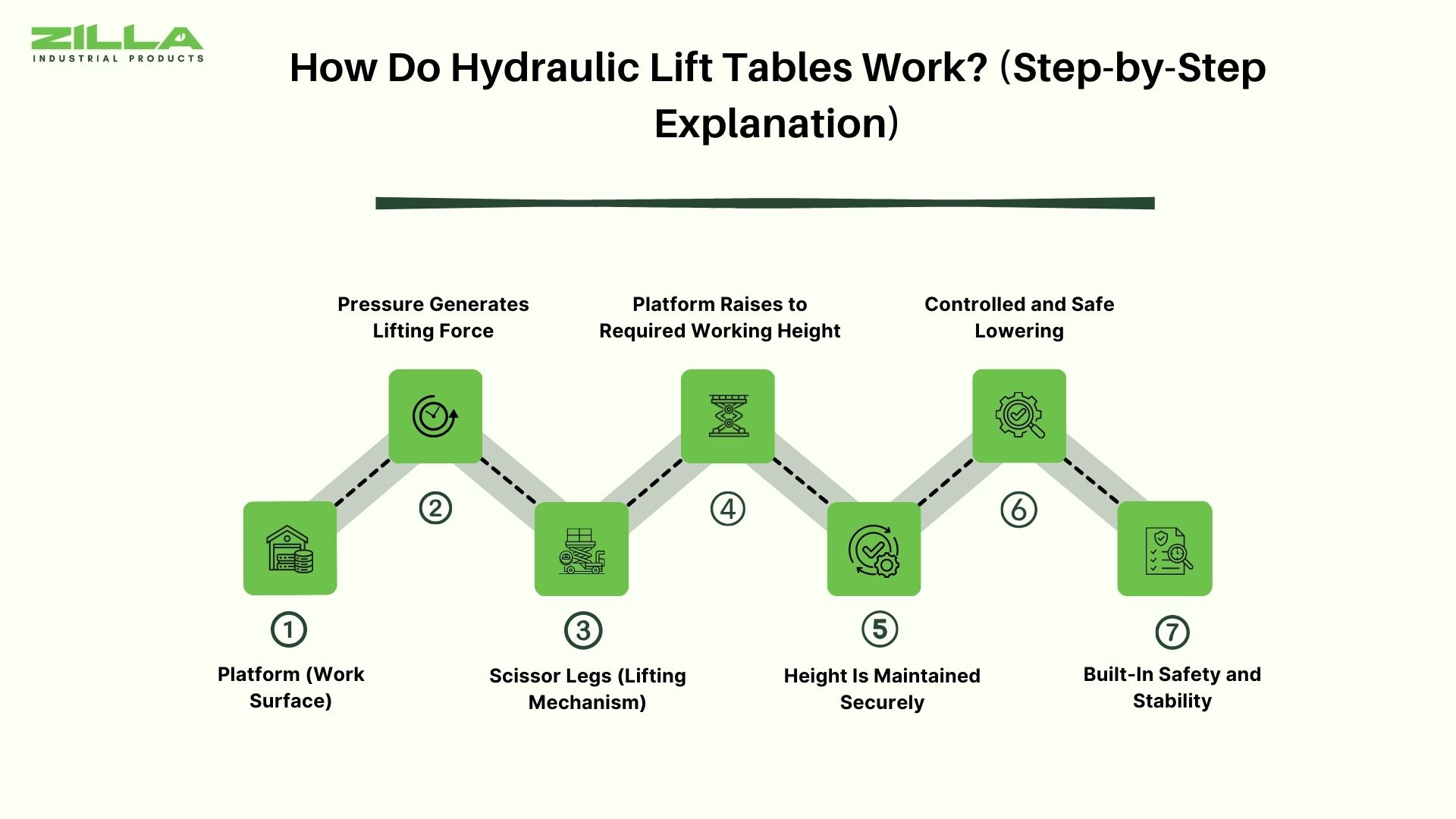
1. Platform (Work Surface)
The platform is the top surface where materials, pallets, or equipment rest during lifting operations. The lifting cycle begins when hydraulic fluid is transferred from the reservoir into the cylinder using a foot-operated pump.
2. Pressure Generates Lifting Force
Because hydraulic fluid does not compress, the oil entering the cylinder builds pressure. This pressure pushes the internal piston rod outward, creating a strong vertical lifting force.
3. Scissor Legs (Lifting Mechanism)
The signature scissor mechanism consists of connected folding supports arranged in an “X” pattern. These high-strength steel legs provide structural support and facilitate smooth vertical movement. As the scissor legs extend, the platform rises; when they retract, the platform lowers.
4. Platform Raises to Required Working Height
The load platform elevates steadily to the desired lift height while maintaining stability under its rated load capacity. This ensures safe material handling during warehouse tasks.
5. Height Is Maintained Securely
A hydraulic check valve holds the pressurised oil inside the cylinder, allowing the lift table to remain at a constant height without additional pumping.
6. Controlled and Safe Lowering
To lower the platform, the operator gently squeezes the release handle. This allows hydraulic fluid to return gradually to the reservoir, ensuring controlled descent even under load.
7. Built-In Safety and Stability
Hydraulic lift tables are designed with overload protection and controlled-flow systems to prevent sudden drops and ensure safe operation in demanding warehouse environments.
How to Choose the Right Hydraulic Lift Table for Your Business Needs
Selecting the right industrial hydraulic lift table ensures safe, efficient, and ergonomic material handling in your warehouse or industrial facility. Here’s a practical guide to help you make the right choice:
1. Determine Your Load Requirements
- Check the weight of pallets, boxes, or equipment you will lift daily.
- Match it to the lift table’s load capacity.
Zilla Industrial Products provides:
– Industrial Hydraulic Lift Table 330 LB Capacity– light-duty tasks
– Industrial Hydraulic Lift Table 660 LB Capacity – medium-duty handling
– Industrial Hydraulic Lift Table 1100 LB Capacity – heavy-duty industrial tasks
– Industrial Hydraulic Lift Table 1750 LB Capacity – high-capacity bulk lifting
2. Consider Lift Height Range
- Ensure the table raises to an ergonomic working height and lowers enough for safe loading/unloading.
- Helps reduce repetitive strain injuries and improve workflow efficiency.
3. Evaluate Platform Size
- The platform must accommodate your typical load size (pallets, cartons, or equipment).
- A properly sized platform improves load stability and reduces handling accidents.
4. Decide Between Mobility or Stationary Use
- Mobile lift tables (with casters) offer flexibility across workstations.
- Stationary tables are ideal for fixed assembly or packing lines.
- Zilla Industrial Hydraulic tables come with durable wheels; heavier capacities include locking casters for secure positioning.
5. Check Safety and Control Features
- Look for controlled descent handles, overload protection, and stable scissor construction.
- These features protect both operators and inventory during warehouse operations.
6. Factor in Maintenance and Durability
- Manual hydraulic lift tables require minimal servicing, ensuring long-term reliability.
- Industrial-grade steel construction enhances longevity in demanding environments.
7. Match the Table to Your Workflow
- Consider task frequency, operator reach, and the type of material handled.
- Choosing the best lift table for ergonomic material handling helps ensure a smooth workflow, reduces fatigue, and improves productivity.
Need help selecting the right lift table? Log in or register to review specifications and select the right solution for your workflow.
Why Hydraulic Lift Tables Are Important for Warehouse and Industrial Use
In modern warehouses and industrial facilities, efficient load handling directly affects productivity, worker safety, and operational costs. Hydraulic lift tables, also known as scissor lift tables and material handling lift tables, have become essential lifting solutions for improving daily workflow efficiency.
Improve Ergonomic Lifting and Worker Safety
Repetitive bending and manual lifting increase the risk of workplace injuries in warehouse and industrial environments. Warehouse lift tables raise pallets and heavy materials to an optimal working height, reducing physical strain and improving operator safety.
Increase Efficiency in Material Movement
Heavy-duty lift equipment allows operators to position products precisely during packing, palletising, assembly, and shipping. Adjustable lift height improves task accuracy and speeds up industrial processes.
Support Demanding Load Requirements
Industrial lifting solutions are engineered to manage high load capacities with stability. Reinforced scissor mechanisms and hydraulic systems ensure reliable performance in distribution centres and manufacturing environments.
Enhance Workflow Control
Hydraulic lift carts and stationary lifting platforms standardise work height, creating smoother transitions between workstations and reducing delays in warehouse operations.
Deliver Long-Term Operational Value
Compared to complex powered systems, manual hydraulic equipment requires minimal maintenance while providing consistent lifting performance, making it a cost-effective investment for industrial use.
Also Read: Top Material Handling Equipment Supplier in Canada – Why Zilla Industrial Products Stands Out
Key Features to Consider When Buying an Industrial Hydraulic Lift Table
| Buying Factor | What to Evaluate | Why It Matters for Warehouse & Industrial Use |
|---|---|---|
| Load Capacity | Check the maximum rated weight (e.g., 330 lb to 1750 lb or higher). | Ensures the hydraulic lift table can safely handle pallets, cartons, or industrial equipment without overloading. |
| Lift Height Range | Review the minimum and maximum platform height. | Proper lift height improves ergonomic material handling and reduces worker fatigue. |
| Platform Size | Measure platform dimensions based on pallet or load size. | Prevents load imbalance and improves stability during material handling operations. |
| Hydraulic System Type | Manual foot pump or electric hydraulic system. | Impacts maintenance requirements, lifting speed, and overall operational efficiency. |
| Scissor Mechanism Strength | Reinforced steel construction and structural stability. | Critical for safe, heavy-duty lifting in demanding warehouse environments. |
| Mobility Options | Fixed installation or mobile hydraulic lift cart with locking casters. | Determines flexibility for warehouse workflow, staging, and workstation movement. |
| Safety Features | Overload protection, controlled descent valve, and locking brakes. | Prevents sudden drops and enhances compliance with workplace safety regulations. |
| Durability & Build Quality | Industrial-grade steel frame and corrosion-resistant finish. | Ensures long-term reliability in industrial, warehouse, and distribution settings. |
| Maintenance Requirements | Accessibility of hydraulic components and service intervals. | Reduces downtime and lowers long-term operational costs. |
Where to Buy Industrial Hydraulic Lift Tables for Warehouse and Industrial Use
Zilla Industrial Products supplies industrial hydraulic lift tables to warehouses and industrial facilities across Western Canada, including Alberta, British Columbia, and Saskatchewan. Our hydraulic lift tables or scissor lift tables are built for safe load handling, ergonomic lifting, and dependable daily operation.
We offer multiple load capacities to suit warehouse, manufacturing, and distribution needs, helping businesses reduce manual handling risks and improve operational efficiency. If you’re looking to buy a reliable hydraulic lift table in Canada. Simply Register or log in to your account to view products, manage orders, and purchase with confidence.